
What if the first step in a deceased estate cleanout isn’t hiring a skip bin, but deciding what shouldn’t go in one? Sorting a home after a loss can feel overwhelming, particularly when family members need time to identify what to keep, sell or donate. A deceased estate cleanout skip bin is most useful for suitable rubbish left after those decisions have been made.
For Perth households, plan the disposal stage by checking the waste type, property access and proposed bin location before booking. Some items, including batteries, chemicals and e-waste, may need separate disposal arrangements. Don’t assume they can go in a general waste bin.
This guide breaks the cleanout into manageable steps, explains how to sort belongings before disposal and outlines what to check before choosing a bin. Madi’s Skips offers Marrel bins from 2m³ to 10m³. The right size depends on the rubbish you have, while placement requirements may differ depending on whether the bin will sit on private property or public land.
Key Takeaways
- Use a deceased estate cleanout skip bin for suitable rubbish after belongings have been sorted, not for valuation or full property clearance.
- Separate items to keep, pass on, donate or sell from confirmed rubbish. Set aside anything the family hasn’t decided about.
- Check the waste category before booking. Asbestos and hazardous materials aren’t acceptable in a general skip bin.
- Compare your estimated rubbish volume with Madi’s Skips’ available bin sizes, from 2m³ to 10m³. No single size will suit every cleanout.
- Before booking, confirm your Perth location, waste type, estimated volume, access and proposed bin placement.
Planning a deceased estate cleanout in Perth: where a skip bin fits
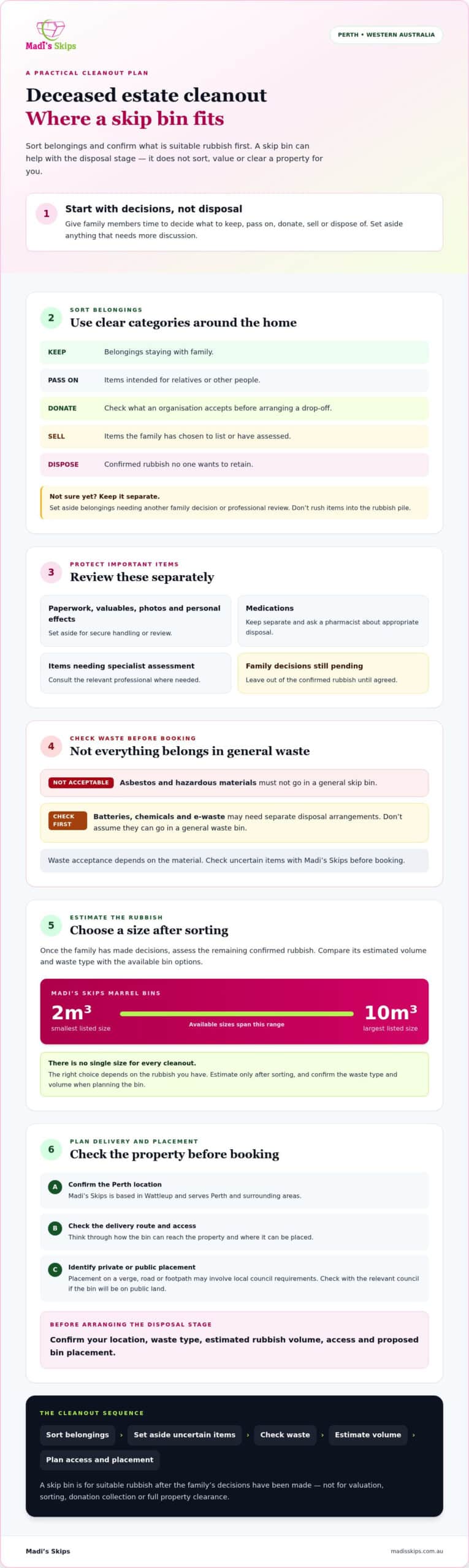
A skip bin can help manage suitable rubbish once the family has sorted the home’s belongings. It gives the disposal portion of a cleanout a clear destination, but it doesn’t provide estate valuation, sorting, donation collection or full property clearance. Arrange a deceased estate cleanout skip bin after decisions have been made about what stays and what can be removed.
Family members may need time to decide what to keep, share, sell or let go. Agree who will make decisions, and set aside belongings that need further discussion. Check whether any property work, such as a repair or inspection, needs to happen before items are removed.
What a skip bin can and cannot do during an estate cleanout
Domestic skip bin hire can collect suitable rubbish from a house or property cleanout. It isn’t a substitute for a professional estate clearance service, and the bin won’t sort, value or move belongings for you. Plan family decisions and any other work at the property before arranging disposal. Waste acceptance depends on the material, so check uncertain items with Madi’s Skips before booking.
For a Perth property, check the delivery route, intended bin location and whether that location is on private property or public land. If you’re considering a verge, road or footpath, check the relevant local council’s requirements. Access and placement can affect which option is workable.
Start with a simple cleanout plan
Work through the property in manageable stages, such as one room or storage area at a time. Label or group belongings as you go:
- Keep: items staying with family.
- Pass on: belongings intended for relatives or other people.
- Donate or sell: items the family has agreed to offer elsewhere.
- Dispose: confirmed rubbish that’s no longer wanted.
For items that prompt uncertainty, create a separate holding area rather than making a rushed decision. The waste management hierarchy offers a useful way to consider whether items can be reused before disposal.
Sort belongings before estimating the rubbish for the bin. Once decisions about what to keep, pass on, donate or sell are clear, assess the remaining rubbish. This gives you a more realistic starting point for discussing bin size and waste type. Madi’s Skips is based in Wattleup and serves Perth and surrounding areas. When you’re ready to plan the disposal stage, review the skip bin booking options.
How to sort belongings before booking a deceased estate skip bin
A clear sorting process helps family members make decisions before estimating the rubbish. Agree who will coordinate decisions, then work through the property in manageable areas. Keep confirmed rubbish separate from anything that needs another look. This reduces the risk of discarding belongings by mistake and gives you a more useful estimate for a deceased estate cleanout skip bin.
Which belongings should be kept, passed on or disposed of?
Use clear categories so everyone knows where items belong:
- Keep: belongings staying with family.
- Pass on: items intended for relatives or other people.
- Donate: suitable items offered to an organisation, after checking what it accepts.
- Sell: belongings the family has chosen to list or have professionally assessed.
- Dispose: confirmed rubbish that no one wants to retain.
Discuss items that may have personal meaning or practical importance before putting them in the rubbish pile. Set aside paperwork, valuables, photographs and personal effects for secure handling or review. Keep medications separate and ask a pharmacist about appropriate disposal rather than placing them in a skip bin. If an item may need legal, financial or specialist assessment, consult the relevant professional. This guide isn’t legal or financial advice.
Sorting can bring up difficult feelings. Take breaks and give family members time to decide. Grief and bereavement support may also be helpful during this process. Don’t assume a charity can accept every donation. Check the organisation’s requirements before arranging a drop-off.
How to make the cleanout easier for family and helpers
Assign each helper a specific room, area or task, and agree on the categories before work begins. Use labels or separate areas for items that are ready to go, belongings awaiting another decision and anything requiring professional review. This makes each item’s status clear and helps keep confirmed rubbish separate from belongings the family hasn’t checked.
After sorting, estimate only the remaining disposal pile. Bulky items may take up more room than expected, so consider the overall mix rather than counting objects alone. Compare your estimate with the available Perth skip bin sizes. If you’re ready to plan the disposal stage, check the skip bin booking options and confirm the waste type before booking.
Deceased estate rubbish: check waste types before filling a skip bin
Don’t assume every item left after sorting belongs in a general waste skip bin. Acceptance depends on the waste category, and some household items may need separate arrangements or confirmation before booking. Check first so you can choose an appropriate bin and avoid putting unsuitable material in with ordinary rubbish.
Asbestos and hazardous materials aren’t acceptable general skip bin waste. Chemicals, liquids and batteries also shouldn’t be treated as normal bin contents. Keep suspected hazardous or prohibited items separate from confirmed rubbish, and don’t place them in the bin. If you find a material you can’t identify, pause and ask for advice before deciding how to handle it.
What to check before placing household items in a bin
Some bulky or unusual items may attract additional disposal charges. Ask about them before booking rather than adding them without checking. Items to mention include:
- Mattresses and bed bases
- Couches or lounge chairs
- Tyres
- Gas bottles and fire extinguishers
Describe the item clearly when you ask, including what it’s made of if you know. Don’t assume an item is accepted just because it came from a home. If you’re unsure about any waste type, check with Madi’s Skips before booking or placing it in the bin.
Why mixed cleanout waste needs careful checking
A single room can contain very different materials. A garage, for example, might have ordinary household rubbish alongside leftover liquids, batteries or a gas bottle. Keep anything potentially hazardous or prohibited apart from confirmed rubbish while you check its requirements. This helps family and helpers see what may be suitable for the skip and what still needs attention.
Use the same care when clearing furniture and stored items. Don’t assume everything from a household cleanout is acceptable waste. A deceased estate cleanout skip bin is for rubbish suitable for the booked waste category, not unconfirmed or hazardous materials.
Don’t rely on a general accepted-waste list to cover every cleanout. Before booking, give Madi’s Skips a clear description of the items you expect to dispose of. For advice about a particular material or bulky item, use the Madi’s Skips contact page to check before it goes in the bin.
Choosing a skip bin size and planning access at a Perth property
Choose a bin after sorting the belongings and estimating what remains for disposal. Madi’s Skips offers Marrel skip bins in 2m³, 3m³, 4m³, 5m³, 6m³, 8m³, 9m³ and 10m³ sizes. The suitable option depends on the amount and type of rubbish, so no one size can be assumed to suit every home or cleanout.
Estimate cleanout volume without treating it as an exact measurement
Count the rooms, sheds or storage areas being cleared, then estimate the rubbish left after family decisions are complete. Consider the space bulky items such as furniture may take up, and note any heavy materials separately. Volume alone can be misleading: soil, bricks, concrete, tiles and rubble can reach weight limits before a bin looks full. Tell Madi’s Skips what you plan to dispose of and confirm the relevant requirements before booking.
Use the Perth skip bin size information to compare the available capacities. Treat your estimate as a planning guide, not an exact measurement. If you’re unsure which size or waste category to select, ask Madi’s Skips for advice before booking.
Check driveway, verge and property access
Think through the delivery route and proposed placement area before arranging a bin. Check that the route is clear, including overhead clearance, and consider whether the bin can sit on the driveway or another suitable part of the property without blocking essential access. Share any access constraints when discussing your booking instead of assuming the intended spot will work.
If you’re considering placement on a verge, road, footpath or other council-controlled land, check the relevant local council’s requirements first. Rules can vary between Perth councils, so don’t assume a permit is always required or never needed. Planning the location early helps you check whether private property is practical or whether you need to make other arrangements.
A deceased estate cleanout skip bin is useful when you’ve considered the waste category, approximate volume and delivery access. Have these details ready before booking: what’s going in, how much there is, where the bin should sit and any access limitations.
Booking a deceased estate cleanout skip bin with Madi’s Skips
Once belongings have been sorted and disposal items identified, gather a few details before requesting a quote. Madi’s Skips is based in Wattleup and provides domestic skip bin hire across Perth and surrounding areas. A clear description of the cleanout helps you check the waste category and available bin options before booking.
What to have ready before requesting a quote
Prepare the property location and a brief description of the rubbish you expect to dispose of. Estimate the volume after sorting, and note whether it includes bulky items or heavy materials. An exact measurement isn’t necessary, but a realistic estimate helps when discussing bin size.
Also note where you hope to place the bin and any practical access concerns, such as a narrow driveway or limited overhead clearance. If you’re considering public or council-controlled land, check the relevant council’s requirements. Keep unusual or uncertain materials separate and ask Madi’s Skips about them before selecting a waste category.
- Location: the Perth property address or suburb.
- Waste: a brief description of confirmed rubbish, including any unusual items.
- Estimated volume: the amount remaining after sorting.
- Access and placement: the intended bin location and any constraints.
Take the next step when your cleanout plan is ready
These details help you make an informed booking enquiry without guessing about bin suitability, waste acceptance or placement. Madi’s Skips offers Marrel bins from 2m³ to 10m³. The suitable option depends on your rubbish, its weight and the property setup. Check the current options and request an online quote once you have your cleanout details to hand.
If you’re unsure about a material, access or placement, contact the team for guidance before booking. A quick check can clarify what information is needed for your deceased estate cleanout skip bin enquiry.
When you’re ready, you can book a skip bin online and review the available options for your Perth cleanout.
Take the next step with a clear cleanout plan
A manageable estate cleanout starts by sorting belongings before estimating what needs disposal. Keep items for family, sale or donation separate from confirmed rubbish, and check unusual or uncertain materials before choosing a waste category. When planning a deceased estate cleanout skip bin, consider the estimated volume alongside property access and the intended placement.
Madi’s Skips is a Wattleup-based local business serving Perth and surrounding areas. Domestic skip bin hire is available in Marrel sizes from 2m³ to 10m³. Once you know what the cleanout rubbish includes, you can discuss the available options. The suitable choice depends on the waste and property, so confirm the details before booking.
Take the cleanout at a pace that works for your family. When you’re ready, check your waste details and book a skip bin online for your Perth cleanout.
Frequently Asked Questions
Can I use a skip bin for a deceased estate cleanout?
Yes. A skip bin can help with suitable rubbish after belongings have been sorted. It’s for the disposal part of the cleanout, not estate valuation, family sorting or full property clearance. Separate items to keep, pass on, donate or sell, then estimate what remains. For a deceased estate cleanout skip bin in Perth, check the waste category and property access before booking.
What size skip bin do I need for a deceased estate cleanout?
The right size depends on how much suitable rubbish remains and what it’s made of. Madi’s Skips offers Marrel bins in 2m³, 3m³, 4m³, 5m³, 6m³, 8m³, 9m³ and 10m³ sizes. Estimate the volume after sorting, and mention bulky or heavy items when asking for advice. Heavy materials can reach weight limits before the bin looks full, so confirm the requirements.
Can furniture go in a deceased estate skip bin?
Some furniture may be suitable, but confirm acceptance before loading it. Couches and lounge chairs, mattresses and bed bases may attract additional disposal charges. Consider whether furniture can be kept, passed on, sold or donated before treating it as rubbish, and check donation requirements directly with the intended organisation. Tell Madi’s Skips what furniture you have so you can confirm the waste category and any applicable conditions before booking.
Can I put chemicals, batteries or asbestos in a skip bin?
No. Don’t put asbestos or hazardous materials in a general skip bin. Chemicals, liquids and batteries also aren’t normal skip bin contents. Keep these items separate from confirmed rubbish and seek suitable disposal guidance. Madi’s Skips doesn’t provide asbestos disposal or hazardous chemical removal. If you find a material you can’t identify, don’t place it in the bin until you’ve confirmed how it should be handled.
How much does a deceased estate cleanout skip bin cost?
The cost depends on factors such as bin size, waste type and delivery location, so there isn’t one price for every Perth cleanout. Some items may also attract additional disposal charges, so mention bulky or unusual items when requesting a quote. Check the Madi’s Skips online booking system for a quote based on your details. Confirm uncertain waste types before selecting a category.
Can a skip bin be placed on the verge outside a Perth property?
Possibly, but check with the relevant local council before arranging placement on a verge or other council-controlled land. Requirements can vary between Perth councils, so don’t assume the same rules apply everywhere. If you’re considering a driveway or another private-property location, check that the delivery route and placement area are suitable too. Share your proposed location and any access concerns when discussing your booking.
What should I do if I am unsure whether an item can go in the bin?
Keep the item separate from confirmed rubbish and contact Madi’s Skips before booking or placing it in the bin. Describe the material and item clearly, including whether it’s bulky or potentially hazardous. This helps confirm whether it suits the waste category you’re considering or whether you need another disposal arrangement. Don’t guess, particularly with chemicals, liquids, batteries, asbestos or other materials you can’t identify.
Disclaimer
The information provided in this article is general in nature and is intended as a guide only. While Madi’s Skips aims to provide accurate and up-to-date information, skip bin availability, pricing, service areas, waste classifications, disposal requirements, weight limits, surcharges and other conditions may change and can vary depending on the type and quantity of waste, bin size, delivery location and disposal facility requirements.
Information in this article should not override Madi’s Skips’ current Terms & Conditions, booking conditions or the information provided during the online quoting and booking process. Where there is any inconsistency, the current Terms & Conditions and booking information applicable at the time of hire take precedence.
Waste acceptance and classification can depend on the materials contained within a load. If you are unsure whether a particular material can be placed in a skip bin or which waste type you should select, please contact Madi’s Skips before booking or placing the material in the bin.
Any information relating to council permits, regulations or requirements is general guidance only. Requirements may vary between local government areas and can change over time. Customers are responsible for confirming any applicable requirements with their relevant local authority.
Madi’s Skips accepts no responsibility for loss, additional charges or other consequences arising from reliance solely on general information contained in our blog without confirming the requirements applicable to your individual booking.
