
Could a skip bin look only half-full and still be too heavy? With bricks, concrete and rubble, weight can become the practical limit before you run out of space. Choosing the right skip bin for brick and rubble Perth residents need starts with confirming the waste category, not just estimating the volume.
It’s easy to assume all renovation debris can go in the same bin. But clean bricks, tiles and concrete may be treated differently from mixed loads containing plasterboard, timber, plastics or other materials. Tell Madi’s Skips what you plan to dispose of and confirm the applicable waste category and loading requirements before booking.
This guide explains what to check about your material mix, how to compare Madi’s Skips’ 2m³ to 10m³ bin sizes and how to prepare for a controlled clean-up. It also covers practical loading steps for heavy rubble. The right bin depends on both the waste volume and its weight.
Key Takeaways
- Before booking a skip bin for brick and rubble in Perth, give Madi’s Skips a clear list of the materials, especially if renovation debris is mixed in.
- Estimate the amount of waste, then discuss the job and loading requirements before choosing a bin size.
- Sort rubble from other waste where practical, and confirm the current instructions before loading.
- Plan where the bin will sit and make sure the delivery area is accessible. Check with your local council if placement involves public land.
- Have these details ready: Perth location, waste mix, estimated volume, site access and preferred bin placement.
Skip Bin for Brick and Rubble in Perth: Confirm the Waste Type First
Before choosing a booking category, tell Madi’s Skips exactly what you plan to put in the bin. Bricks and rubble may qualify as Construction and Demolition (C&D) or inert waste under applicable rules, but the classification and booking requirements depend on the actual material mix. Don’t assume a bin suitable for clean masonry will also suit mixed renovation debris.
For a booking, qualifying C&D material generally means construction or demolition material accepted under Madi’s Skips’ current waste rules. It isn’t a blanket label for everything removed from a building site. The Demolition waste overview describes common materials from demolition, but it doesn’t determine what can go in a particular skip bin. For local service information, see Perth skip-bin hire information.
Which brick, masonry and rubble materials should I confirm?
Bricks, concrete, tiles, sand, soil, rubble, masonry products and clean fill may qualify as C&D or inert material. That doesn’t mean every item is automatically accepted for every booking. Tell Madi’s Skips what each material is and whether it’s clean or mixed, then confirm the category before booking. If you’re unsure about an item, ask before putting it in the bin.
Can mixed renovation waste go in a brick and rubble bin?
Not necessarily. Don’t assume plasterboard, treated timber, MDF, plastics or composite materials qualify as C&D waste. Painted or laminated timber, insulation and other processed materials may also affect how a mixed load is classified. The right category depends on the contents and Madi’s Skips’ current requirements.
For example, a pile of bricks and broken concrete from a wall removal is different from rubble mixed with plasterboard offcuts, timber framing and plastic packaging. Where practical, keep masonry separate from other renovation materials. Then give Madi’s Skips a clear list of the contents and confirm whether they can share a bin before choosing a skip bin for brick and rubble Perth projects.
If older building materials may contain asbestos, don’t put them in a standard skip bin. Asbestos and hazardous materials aren’t acceptable general skip-bin waste. Confirm that materials are suitable for the booking before loading.
How to Choose a Perth Skip Bin for Heavy Bricks and Rubble
Work through five checks when choosing a bin: list the materials, estimate the pile’s volume, consider its weight, check delivery access and confirm the booking requirements with Madi’s Skips. For rubble, volume alone can be misleading. Dense bricks and concrete may reach a practical weight limit while there’s still room in the bin. A larger bin doesn’t automatically mean you can load more heavy material.
Madi’s Skips offers bins in 2m³, 3m³, 4m³, 5m³, 6m³, 8m³, 9m³ and 10m³ sizes. These are options to discuss, not a guarantee that a particular size will suit your project. Check the available sizes and confirm the relevant weight limits and waste-category conditions before booking. For broader WA waste guidance, you can also refer to Waste Authority WA.
Estimate rubble volume without overlooking weight
As a planning aid, estimate the pile’s length, width and height. This gives you a rough idea of how much space the material may take up, but it isn’t a guaranteed bin-capacity calculation. Bricks and rubble are denser than lighter household rubbish, so piles of similar size can place different demands on a bin. Share your material list and project details with Madi’s Skips to discuss a suitable option.
Which bin size might suit a brick or rubble project?
A small repair may produce a different amount of masonry from a room renovation, while a larger site clean-up can involve considerably more material. Use these examples to describe your job, not as fixed size recommendations. The right choice depends on the rubble volume, its weight, what else is included and the conditions for your booking.
Before opting for a larger bin, confirm its weight conditions and the category requirements for your exact load. Check access too: the delivery location needs to suit the bin and allow for placement. If you’re comparing sizes for a skip bin for brick and rubble Perth project, give Madi’s Skips your location, material list and rough pile dimensions. You can then review booking options with those details in mind.
How to Prepare and Load a Skip Bin for Brick and Rubble
Some preparation can make a brick and rubble clean-up easier to manage. Before delivery, confirm the waste category and loading requirements with Madi’s Skips. Keep the load within the instructions for your booking. A bin can reach its permitted loading limit before it looks full, so don’t use the rim as a guide to how much heavy material you can add.
Sort materials and prepare the Perth work area
Where practical, separate confirmed masonry from renovation materials that haven’t been approved for the same bin. If you uncover something unexpected, pause and ask Madi’s Skips before adding it. Asbestos and hazardous materials must not go into a general skip bin.
Before delivery, check that the intended spot suits the booked bin and that access is clear. Move vehicles, tools and loose materials out of the delivery area. Also consider whether the bin’s position will leave enough room to carry rubble to it without creating extra obstacles.
Plan bin placement, access and public-land checks
A driveway or another private-property location may be practical if it suits the site and delivery access. If you’re considering a road, verge, footpath or other public land, check the requirements with the relevant local council before arranging placement. Rules and processes can vary between councils, so don’t assume the same conditions apply across Perth.
Load steadily and follow the confirmed instructions
Once the bin is in place, add rubble in a controlled way rather than tipping in a large pile all at once. Avoid dropping heavy pieces from a height, and keep the load contained within the bin. Follow Madi’s Skips’ current loading and weight instructions, including any limits or conditions that apply to your booking. If you’re unsure how much more you can load, stop and check before continuing.
- Separate approved masonry from uncertain mixed debris where practical.
- Keep the delivery area and route to the bin clear.
- Confirm council requirements if placement involves public land.
- Stop loading at the confirmed limit, even if the bin isn’t full by volume.
These checks help you prepare for a skip bin for brick and rubble Perth clean-up without guessing about placement or loading. Confirm unusual materials and any weight questions with Madi’s Skips before putting them in the bin.
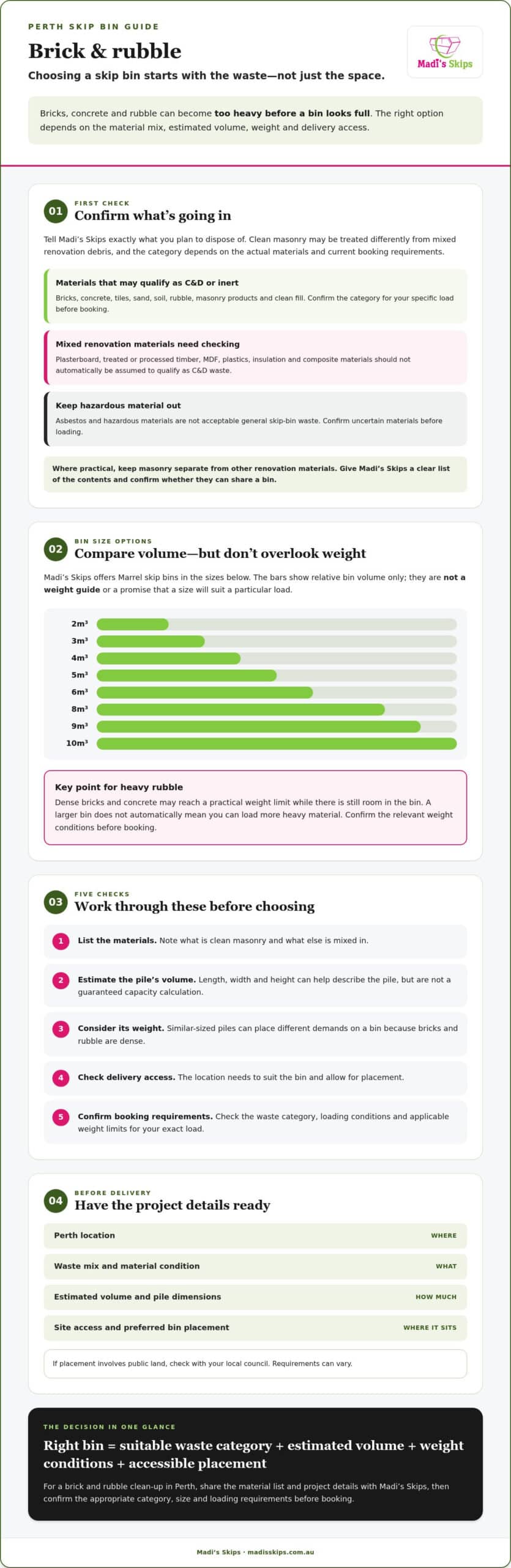
What to Check Before Booking a Brick and Rubble Skip Bin in Perth
A clear booking enquiry helps Madi’s Skips check the waste category and discuss a suitable bin for your project. Before booking a skip bin for brick and rubble Perth customers should have the key job details ready, especially if the load includes materials beyond clean masonry.
What information helps confirm the right booking?
- Perth job address: Provide the suburb and delivery location so service availability can be checked.
- Material list: Name the bricks, concrete, tiles or other rubble, and list any additional materials separately.
- Estimated volume: Describe the pile or estimate its length, width and height as a planning guide, not a guaranteed capacity calculation.
- Access details: Mention narrow driveways, restricted entry or other site conditions that could affect delivery and placement.
- Preferred placement: Say whether you’re considering private property or public land, such as a road, verge or footpath. Check public-land requirements with the relevant council, as they can vary.
Ask Madi’s Skips to confirm the current waste category, weight and loading requirements that apply to your materials. Check current prices, bin availability and booking conditions directly before confirming. These details depend on the booking and shouldn’t be assumed from the bin’s size alone.
What if the waste includes more than bricks and rubble?
Describe the contents specifically rather than calling the whole load “building waste”. For example, list masonry separately from plasterboard, timber, insulation, plastics or composite materials. Those additional items shouldn’t automatically be treated as qualifying C&D or inert waste, and the mix may affect the correct booking category.
If you’re unsure about a material, ask before booking and keep it separate until Madi’s Skips confirms whether it can go in the bin. Never put asbestos or hazardous materials in a general skip bin. Being upfront about the full load helps avoid choosing a category based on only part of the waste.
Once you have the address, material list, volume estimate, access details and placement plan, you’ll be better prepared to check the right option. Confirm any outstanding category or loading questions before proceeding.
Book a Suitable Skip Bin for Brick and Rubble Removal in Perth
For a brick and rubble clean-up, make the booking decision in this order: confirm the waste category, plan around the material’s weight, then choose a suitable available bin size. A bin that appears to have spare room may still be at its loading limit when filled with dense rubble, so don’t choose by volume alone.
Madi’s Skips provides skip-bin hire for Perth’s domestic, commercial and industrial waste needs. Its bin sizes range from 2m³ to 10m³. The suitable option depends on your confirmed waste type, estimated volume, weight conditions and delivery access. Check current availability and booking requirements with Madi’s Skips rather than assuming a particular size will suit.
A quick final check before the bin arrives
Before the clean-up starts, make sure the waste still matches the category you booked. Renovation work can uncover additional materials, so contact Madi’s Skips if the load changes or you’re unsure whether new items can go in the bin. Keep the delivery route and intended placement area clear, then follow the confirmed loading and weight instructions throughout the job. Stop loading at the stated limit, even if the bin isn’t full by volume.
When to ask Madi’s Skips for advice
Ask before booking if your load includes mixed, unusual or hard-to-classify materials. Give Madi’s Skips the material list, job location, rough volume and access details. You can also confirm which sizes may be suitable to discuss, along with current waste conditions and availability. Don’t assume a material is accepted or that pricing and delivery timing are the same for every booking. Confirm those details directly before proceeding.
These checks help you arrange a skip bin for brick and rubble Perth project with fewer surprises: confirm the waste information first, choose a practical size next, then plan loading around the requirements for your booking.
Plan Your Rubble Clean-Up with Confidence
A smooth brick and rubble clean-up starts with confirming the exact waste mix before you book. Bricks, tiles and concrete may suit a C&D or inert waste category, but mixed renovation materials need to be checked with Madi’s Skips. Then plan around weight as well as volume, and follow the loading requirements confirmed for your booking.
For a skip bin for brick and rubble Perth project, Madi’s Skips offers bin sizes from 2m³ to 10m³ for domestic, commercial and industrial waste needs. Share your material list, estimated volume and site details to help discuss which available option may suit. Confirm current waste conditions, weight requirements and availability before booking.
Frequently Asked Questions
Can I put bricks and rubble in a skip bin in Perth?
Bricks and rubble may be accepted in a suitable skip-bin category, but confirm the exact material mix with Madi’s Skips before booking. Bricks, concrete, tiles, sand, soil and masonry may qualify as C&D or inert material under applicable rules. Acceptance isn’t automatic, especially if the load includes other renovation waste. Describe what you plan to dispose of and check the category and booking conditions for your Perth clean-up.
How do I choose a skip-bin size for bricks and rubble?
Estimate the pile’s dimensions, list the materials, then consider weight as well as volume. Dense rubble can reach a practical loading limit before the bin looks full, so a larger bin doesn’t necessarily mean you can load more heavy material. Madi’s Skips offers bins from 2m³ to 10m³. Share your project details with the team and confirm size suitability and current weight requirements before booking.
Can I mix bricks with plasterboard or timber in the same bin?
Don’t assume plasterboard or timber can go in the same bin as bricks. These materials may affect the waste category, and treated, processed, painted or laminated timber shouldn’t automatically be considered qualifying C&D waste. Tell Madi’s Skips about every significant material in the load before booking. Where practical, keep uncertain renovation debris separate until the team confirms the correct category and whether the materials can be combined.
What happens if my brick and rubble bin gets too heavy?
Stop loading once you reach the weight or loading limit confirmed for your booking, even if there’s still room in the bin. Heavy bricks and rubble can become the limiting factor before the bin is physically full. Don’t estimate the limit by appearance. Contact Madi’s Skips if you’re unsure how much more you can load or need to clarify the current requirements for your waste category.
Can I put asbestos or chemicals in a skip bin?
No. Asbestos and hazardous materials, including chemicals, must not go in a general skip bin. Don’t load or mix these materials with bricks and rubble. If you’re concerned that demolition debris may contain asbestos, keep it out of the bin and seek advice from an appropriately qualified specialist about identification and handling. Ask Madi’s Skips about any uncertain material before putting it into a booked skip.
Can a skip bin be placed on a verge or road in Perth?
Check with the relevant local council before arranging skip-bin placement on a verge, road, footpath or other public land. Requirements and processes can vary between councils, so don’t assume the rules are the same across Perth. If you’re considering a driveway or another private-property location, confirm with Madi’s Skips that the area is suitable and accessible for the booked bin.
What information should I have ready before booking a brick and rubble bin?
Have the job address, a list of materials, an estimate of the waste volume and details about site access ready. Note whether you’re considering private-property or public-land placement. Be specific about mixed renovation debris rather than describing everything as building waste. Madi’s Skips can then help confirm the waste category, available size options and current loading conditions before you finalise your skip-bin booking.
Ready to plan your Perth clean-up? Check skip-bin options with Madi’s Skips and confirm your waste mix, size and loading requirements before booking.
Disclaimer
The information provided in this article is general in nature and is intended as a guide only. While Madi’s Skips aims to provide accurate and up-to-date information, skip bin availability, pricing, service areas, waste classifications, disposal requirements, weight limits, surcharges and other conditions may change and can vary depending on the type and quantity of waste, bin size, delivery location and disposal facility requirements.
Information in this article should not override Madi’s Skips’ current Terms & Conditions, booking conditions or the information provided during the online quoting and booking process. Where there is any inconsistency, the current Terms & Conditions and booking information applicable at the time of hire take precedence.
Waste acceptance and classification can depend on the materials contained within a load. If you are unsure whether a particular material can be placed in a skip bin or which waste type you should select, please contact Madi’s Skips before booking or placing the material in the bin.
Any information relating to council permits, regulations or requirements is general guidance only. Requirements may vary between local government areas and can change over time. Customers are responsible for confirming any applicable requirements with their relevant local authority.
Madi’s Skips accepts no responsibility for loss, additional charges or other consequences arising from reliance solely on general information contained in our blog without confirming the requirements applicable to your individual booking.
