
The biggest skip bin isn’t automatically the right choice for a warehouse cleanout. A mix of cardboard, shelving, office equipment and heavy building materials can call for different waste sorting and capacity planning. If you need a warehouse cleanout skip bin Perth, Western Australia businesses can use, start by listing what’s being removed and deciding where a bin can be placed.
Volume, unusual materials, truck access and the effect on daily operations all need to be considered before booking. This guide explains how to estimate the rubbish, choose from Madi’s Skips’ Marrel bin sizes from 2m³ to 10m³, separate waste types and prepare a safe, accessible loading area. Madi’s Skips is a locally owned business based in Wattleup, providing commercial and industrial skip bin hire in Perth and surrounding areas. Use the steps below to organise the cleanout and give a clearer description of your project when requesting a quote.
Key Takeaways
- List warehouse rubbish by material before choosing a bin. Mixed waste doesn’t automatically belong in one waste category.
- Compare your cleanout scope with Madi’s Skips’ available bin sizes. Heavy materials can reach a weight limit before the bin is full.
- For a warehouse cleanout skip bin Perth, Western Australia businesses can use, plan the waste types, bin size and site access before booking.
- Prepare the drop-off area by checking truck access, loading space and nearby work activity.
- Have the delivery location, project details and waste types ready when requesting a quote.
Warehouse cleanout in Perth: when a skip bin makes the job easier
A warehouse cleanout involves removing unwanted stock, packaging, fixtures or accumulated rubbish from a worksite. It may be part of a business move, a change in how the space is used, a renovation or a property clean-up. Because the job can involve several material types, identify what needs to go before treating it as one pile.
A skip bin gives staff and trades a central place to load rubbish as the work progresses. This can help when clearing one section at a time, removing old fittings or preparing an area for new use. A planned collection point can also help keep loose debris out of active work areas. Sorting materials first supports sound waste management practices and makes it easier to describe the job when arranging a booking.
Madi’s Skips is locally owned and based in Wattleup, providing commercial and industrial skip bin hire across Perth and surrounding areas. Learn more about Madi’s Skips and Perth skip bin hire for workplace clean-ups and other projects.
What warehouse projects commonly create rubbish?
Warehouse cleanouts may produce packaging, unwanted shelving or other fixtures, damaged stock and general cleanout debris. A fit-out or renovation can add removed fittings and building materials to the load. These examples don’t mean every item belongs in the same bin or waste category. Record unusual, mixed or potentially heavy materials separately before booking.
- Packaging and accumulated rubbish from storage areas.
- Fixtures or shelving removed during a layout change.
- Mixed debris from a renovation or fit-out.
Use this list to describe the project clearly. If you’re unsure how a material is classified or whether it can go in the booked bin, contact Madi’s Skips before loading it.
When is a skip bin a practical cleanout option?
A skip bin suits a defined cleanout where a team expects to remove a noticeable volume of rubbish over a planned period. It can work well for staged jobs: clear a storage bay, load the resulting rubbish, then move to the next area. Choosing a loading point in advance helps staff organise the work and avoid making repeated trips to dispose of individual items.
A warehouse cleanout skip bin is for rubbish from a planned workplace clear-out, renovation or property reset. If the site produces only small amounts of rubbish gradually, a one-off bin may not suit that ongoing need. Regular operational waste and a contained cleanout are different jobs. For a project-based booking, the phrase warehouse cleanout skip bin Perth, Western Australia describes the practical task: match the bin and waste category to the actual cleanout instead of assuming one arrangement suits every site.
Sort warehouse cleanout waste before choosing your Perth skip bin
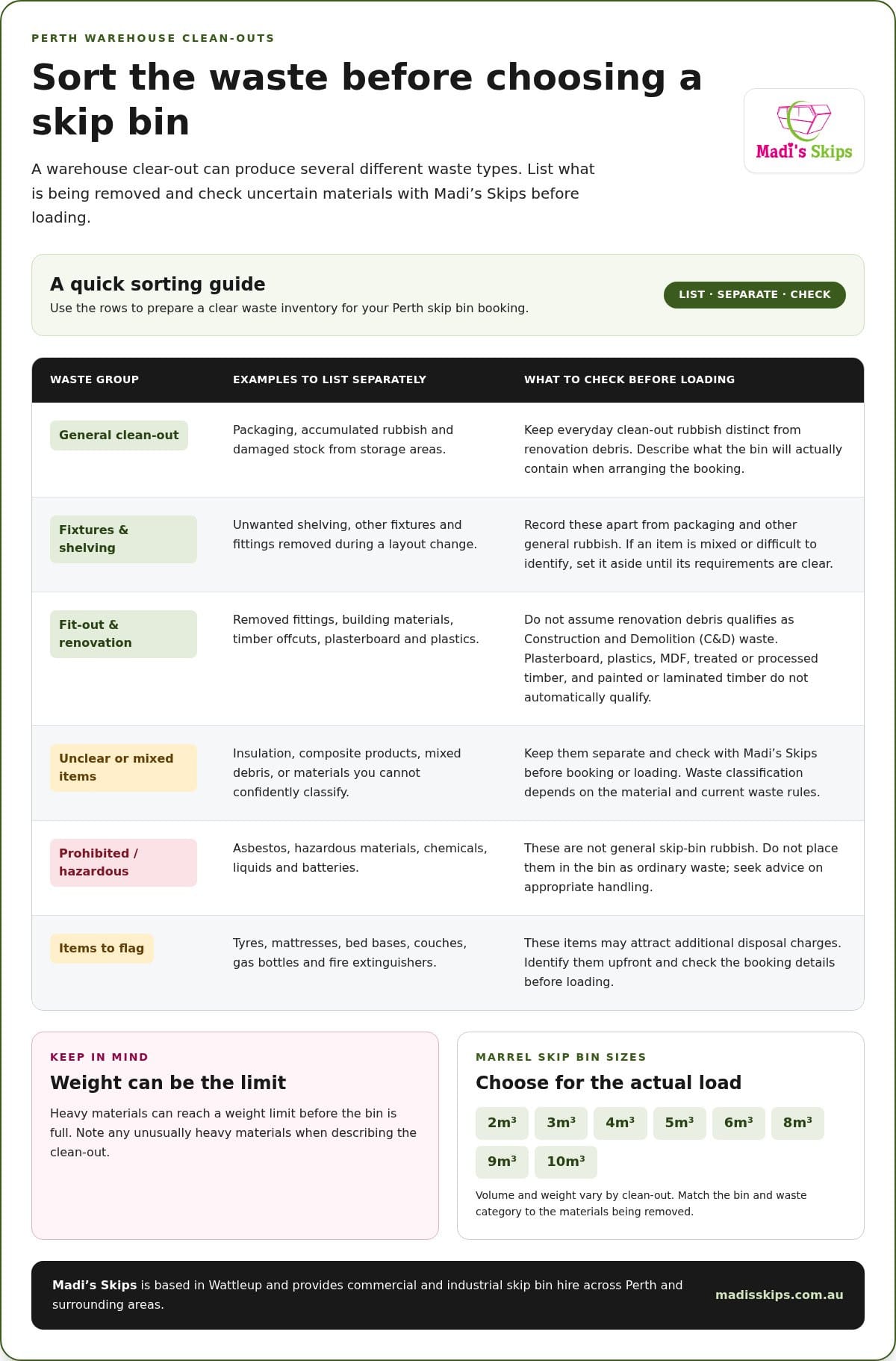
Make a short waste inventory before selecting a bin size or waste category. A warehouse cleanout can bring together packaging, discarded fixtures, renovation debris and materials from storage areas. These items don’t automatically belong in one accepted waste stream. Sorting first clarifies the job and helps you describe the rubbish accurately when arranging skip bin hire in Perth.
Use separate, labelled areas or a simple written list to group materials. Note anything mixed, unusually heavy or difficult to identify instead of placing it with general rubbish by default. If a material’s classification is unclear, contact Madi’s Skips before loading it. The booking should reflect what the bin will actually contain.
Separate general cleanout rubbish from building and fit-out materials
Keep everyday cleanout items distinct from materials removed during building work. For example, record packaging, unwanted fixtures, timber offcuts, plasterboard and plastics as separate types. This helps you identify what the project has produced and reduces the risk of choosing a waste category based on only one part of the load.
Don’t assume renovation debris qualifies as Construction and Demolition (C&D) waste. Plasterboard, treated or processed timber, MDF and plastics don’t automatically qualify as C&D material. The same caution applies to painted or laminated timber, insulation and composite products. Classification depends on the material and Madi’s Skips’ current waste rules. Check uncertain items before booking rather than mixing them into a load and hoping they fit the category.
- List packaging and general cleanout rubbish separately from fit-out debris.
- Identify timber by type, especially if it’s treated, painted or processed.
- Set aside materials you can’t confidently classify until you’ve checked their booking requirements.
Flag prohibited or potentially chargeable items
Asbestos and hazardous materials aren’t general skip bin waste. Don’t put chemicals, liquids or batteries in a bin as ordinary rubbish. Keep liquid waste separate from solid rubbish and seek advice on appropriate handling. The Government of Western Australia’s guidance on industrial wastewater management and disposal relates to wastewater, not general skip bin acceptance, so it isn’t a list of materials suitable for a skip.
Also flag items that may attract additional disposal charges, including tyres, mattresses, bed bases, couches, gas bottles and fire extinguishers. Don’t hide them among other rubbish. Contact Madi’s Skips before loading these items or other materials you’re unsure about, so you can clarify the waste type and booking details upfront. A Perth warehouse cleanout bin booking should describe the actual materials going into the load.
Once you’ve sorted the inventory, use it to guide your booking. You can start a skip bin booking with the cleanout details ready, and contact Madi’s Skips about materials that need clarification before they go into the bin.
Choose a Perth skip bin size for warehouse cleanout volume and weight
Choose a bin by considering both the amount of rubbish and what it’s made of. A warehouse may have bulky packaging that takes up space but weighs relatively little, alongside dense materials that add weight quickly. Madi’s Skips offers Marrel bins in 2m³, 3m³, 4m³, 5m³, 6m³, 8m³, 9m³ and 10m³. The examples below can help narrow down the options, but no size is guaranteed to suit every cleanout.
| Bin size | Indicative project context |
|---|---|
| 2m³ or 3m³ | A smaller, clearly defined clear-out with a limited amount of rubbish. |
| 4m³ or 5m³ | A contained cleanout involving several items or one work area. |
| 6m³ | A broader cleanout where rubbish is gathered from more than one area. |
| 8m³, 9m³ or 10m³ | A larger project with a greater volume of suitable, lighter materials. |
Estimate warehouse rubbish volume before booking
Walk through the worksite and group the rubbish into rough piles or zones, such as a storage bay, loading area or office corner. Assess bulky packaging and fixtures separately from dense building materials. A pile of cartons can occupy more space than its weight suggests, while compacted or stacked materials may use space differently. Use the available skip bin sizes as a reference alongside your own site assessment.
Think about how the rubbish will be loaded, too. Unbroken packaging, awkward fixtures and loose debris won’t arrange in the bin in the same way. A rough zone-by-zone inventory is more useful than estimating from the warehouse floor area alone.
Match the bin choice to the waste, not just the floor space
A bigger bin isn’t automatically suitable for a heavy load. Soil, bricks, concrete, tiles and rubble can reach a weight limit before the bin looks full. If your cleanout includes these materials, list them separately and discuss the approximate amount before booking. Don’t estimate only by how much space the pile occupies.
When you request a quote, explain both the material types and the approximate load. If the project combines bulky packaging with dense or mixed renovation debris, say so. Volume alone won’t show what the bin needs to carry. Waste category matters as well as size, so don’t assume mixed materials fit one booking type.
For a Perth warehouse cleanout, choose a bin based on the actual rubbish and its weight, not just a visual guess. Compare the available options, then use your inventory to guide the booking rather than treating the indicative examples as a capacity promise.
Plan warehouse skip bin access, placement and loading in Perth
A suitable bin also needs a workable place on site. Before booking, consider how the delivery vehicle will reach the proposed area, whether staff can load it safely and how the cleanout will affect normal warehouse activity. A loading bay that looks clear on a plan may be busy with deliveries or forklifts during the cleanout, so include day-to-day movements in your plan.
Use this sequence to prepare:
- Define the cleanout scope. Note which warehouse areas are being cleared and whether the work is staged or happening in one run.
- Confirm the waste details. Group materials by type and describe anything mixed, unusual or heavy.
- Choose a proposed bin area. Look for a stable, accessible location with a clear approach for the delivery vehicle and room for loading.
- Check site movements. Consider loading-bay use, vehicle routes, pedestrian access and work continuing nearby.
- Prepare booking information. Have the Perth delivery location, project scope, waste types and preferred bin size ready.
Check the warehouse loading area and vehicle access
Identify the intended placement area before arranging delivery. Check for obstructions along the approach and around the proposed position, and consider whether regular deliveries, forklifts or other site activity could conflict with placement or loading. A clear route and usable space help with planning, but each site is different, so don’t assume a particular location will suit every delivery arrangement.
If the only possible position is on public land, a road, footpath or another council-controlled area, requirements vary between councils. Check with the relevant local council before planning to use that space. Where possible, plan around a suitable on-site location instead.
Prepare the cleanout team and loading sequence
Keep accepted materials grouped and clearly separated before loading. This helps the team identify what belongs in the booked waste stream and reduces the chance of uncertain items being added by mistake. Agree on a loading sequence that works with the cleanout stages and the warehouse’s operating needs, rather than letting rubbish accumulate wherever space is available.
Keep the area around the bin orderly and leave access clear for people and site vehicles. Load only the waste type agreed for the booking, and don’t overfill the bin or load it unsafely. If the contents change as the project progresses, pause before adding materials that weren’t part of the original plan.
Access, waste type and weight all affect whether a skip bin suits a warehouse cleanout. Share the placement plan and waste details when booking so the arrangement reflects the real site conditions.
Book a warehouse cleanout skip bin in Perth with Madi’s Skips
Once you’ve mapped out the cleanout, bring the key details together before requesting a quote. A clear description helps align the booking with the work planned at your site. Include the Perth delivery address, what the cleanout involves, the main waste types, your preferred bin size and any access considerations. The online quote takes the selected bin, waste type and delivery location into account.
Madi’s Skips provides commercial and industrial skip bin hire across Perth and surrounding areas. For businesses arranging a warehouse cleanout skip bin Perth, Western Australia, having the project details ready makes it easier to move from planning to a suitable booking without guessing about what the bin is for.
What to have ready when booking
Describe the cleanout in practical terms. For example, explain whether you’re clearing one work area, removing old fixtures during a fit-out or clearing accumulated rubbish across the warehouse. List the main materials rather than relying on a broad description such as “mixed waste”. If you’re unsure how an item should be classified, contact Madi’s Skips before booking or loading it.
Have the site address and placement details ready as well. Note where you’d like the bin placed and anything that could affect access, such as a busy loading bay, vehicle movements or limited loading space. These details help keep the booking aligned with site conditions. The bin also needs to suit the waste itself, so don’t assume all cleanout materials belong in one category.
Your preferred size is a useful starting point, not a guarantee that it will suit every load. Consider the space occupied by bulky rubbish and the weight of dense materials when describing the job. If the cleanout includes heavy or mixed materials, explain that clearly so the quote can be based on the intended waste type and project details.
Turn the cleanout plan into a booking
- Waste sorted: Main material types are identified, and uncertain items are set aside for clarification.
- Capacity considered: You’ve estimated the amount of rubbish and factored in bulky or dense materials.
- Access planned: The proposed bin area and vehicle approach have been considered alongside site activity.
- Booking details prepared: You have the Perth address, project scope, waste description and preferred size ready.
This checklist connects the cleanout plan to the booking information and helps identify missing details before work begins, especially if several teams or work areas are involved.
When the site plan and waste details are ready, use Madi’s Skips’ online booking pathway to request a quote for your warehouse cleanout.
Get your warehouse cleanout moving
A well-planned cleanout can clear space for new stock, a fit-out or a change in operations. Before work begins, make sure everyone involved understands the loading plan and knows who can answer questions about items that aren’t part of the agreed waste stream. This can prevent uncertainty from slowing the job down.
Once your site plan and booking details are ready, arranging a warehouse cleanout skip bin Perth, Western Australia businesses can use is a practical next step. Coordinate the booking with the cleanout schedule and keep the agreed waste and placement details accessible to the team on site.
With the job organised before the first load, your team can focus on clearing the space and preparing the warehouse for what comes next.
Frequently Asked Questions
How much does warehouse cleanout skip bin hire cost in Perth?
The cost depends on the bin size, waste type and delivery location, so there isn’t one price for every warehouse cleanout. For an accurate amount, enter your Perth site address and select the bin and waste category that match your project in Madi’s Skips’ online quote and booking system. If your cleanout includes several waste types, don’t base the quote on the largest pile alone.
Can I put different types of warehouse rubbish in one skip bin?
Only if the materials suit the same accepted waste category for your booking. A small amount of packaging mixed with other rubbish may be treated differently from a load containing fit-out debris or dense building materials. Describe the mix before booking, including anything you’re uncertain about. If the waste changes during the cleanout, pause before adding items that weren’t part of the agreed booking.
Can asbestos or hazardous chemicals go in a warehouse skip bin?
No. Asbestos and hazardous chemicals must not go into a general warehouse skip bin. Don’t load them with ordinary cleanout rubbish or conceal them in a mixed load. If these materials are found during a warehouse clear-out, keep them out of the skip and arrange appropriate handling separately. This keeps the bin contents aligned with the waste type booked for your Perth cleanout.
Can a skip bin be placed on a verge or public road in Perth?
Check with the relevant local council before planning to place a bin on a verge, road, footpath or other public land. Requirements differ between Perth councils and can depend on the location and placement. If you’re considering a public area because the warehouse has limited private space, include that in your site planning early. A position entirely within the property avoids relying on public land.
Do tyres, mattresses or gas bottles go in a warehouse cleanout bin?
Don’t assume these items are covered by a standard waste booking. Tyres and gas bottles may attract additional disposal charges, as can mattresses, bed bases, couches and fire extinguishers. List any such items separately when arranging the bin, rather than adding them unnoticed during loading. For a warehouse cleanout skip bin Perth, Western Australia businesses should describe special items upfront so the quote reflects the intended contents.
Can I put batteries or liquids in a skip bin?
No. Batteries and liquids aren’t normal acceptable skip bin rubbish, so keep them out of the bin. Don’t pour liquid into other waste or leave batteries among general cleanout materials. If you find either during a stockroom or equipment clear-out, set it aside and arrange suitable handling separately. Contact Madi’s Skips before loading any other unusual item if you’re unsure how it should be treated.
How far in advance should I book a warehouse cleanout skip bin?
Arrange the booking once your cleanout dates, waste types and proposed bin area are clear, rather than waiting until the team is ready to load. This gives you time to coordinate the booking with warehouse operations and resolve questions about mixed or unusual materials. Use Madi’s Skips’ online booking pathway to request a quote for your planned Perth delivery location and cleanout details.
Disclaimer
The information provided in this article is general in nature and is intended as a guide only. While Madi’s Skips aims to provide accurate and up-to-date information, skip bin availability, pricing, service areas, waste classifications, disposal requirements, weight limits, surcharges and other conditions may change and can vary depending on the type and quantity of waste, bin size, delivery location and disposal facility requirements.
Information in this article should not override Madi’s Skips’ current Terms & Conditions, booking conditions or the information provided during the online quoting and booking process. Where there is any inconsistency, the current Terms & Conditions and booking information applicable at the time of hire take precedence.
Waste acceptance and classification can depend on the materials contained within a load. If you are unsure whether a particular material can be placed in a skip bin or which waste type you should select, please contact Madi’s Skips before booking or placing the material in the bin.
Any information relating to council permits, regulations or requirements is general guidance only. Requirements may vary between local government areas and can change over time. Customers are responsible for confirming any applicable requirements with their relevant local authority.
Madi’s Skips accepts no responsibility for loss, additional charges or other consequences arising from reliance solely on general information contained in our blog without confirming the requirements applicable to your individual booking.
