
A pile of renovation waste can look like one load, but different materials may belong in different waste categories. If you’re asking what can you put in a skip bin, the answer depends on the materials, not just the project they came from. Sorting items before you book helps you describe the load accurately, choose a suitable bin and avoid mixing in restricted or surchargeable waste.
For Perth clean-ups, renovations and building work, start by separating general rubbish from materials that may qualify as construction and demolition (C&D) waste. Keep potentially chargeable items aside, and leave hazardous or excluded materials out of the bin. This guide covers common household and project waste, explains why not all building materials count as C&D, and outlines what to consider when choosing a Madi’s Skips bin.
Key Takeaways
- Work out what can you put in a skip bin by sorting waste by material and checking its category, rather than assuming everything from one project belongs together.
- Concrete, bricks, tiles, soil and similar materials may qualify as C&D waste, while mixed or processed building materials need careful classification before booking.
- Keep asbestos, hazardous chemicals, liquids and batteries out of the bin. Some items, including mattresses, tyres and couches, may attract additional disposal charges.
- List your waste, separate uncertain items and estimate the load before choosing a bin. Keep potentially qualifying heavy materials apart from mixed waste where practical.
- Match the waste type and volume to a Madi’s Skips Marrel bin, available in sizes from 2m³ to 10m³, then book online.
What Can You Put in a Skip Bin? Start With the Waste Type
The answer to what can you put in a skip bin depends on the material and Madi’s Skips’ current waste rules. A skip bin isn’t a catch-all for everything from a clean-up or building job. First identify each material, then choose the waste type and bin that suit the load. A waste container is a broad category, but skip-bin contents still need to fit the provider’s specific rules.
For Perth projects, separate general clean-up waste from potential construction and demolition (C&D) material. Set aside items that may attract additional disposal charges, and keep excluded or hazardous waste out of the bin. If a load contains several material types, don’t assume it can all be booked under one classification.
Sort project waste into four practical groups
Use these groups to prepare a clear description of your load. They’re a practical starting point, not a universal list of accepted materials.
- General clean-up waste: Materials from a household, commercial or property clean-up that don’t clearly fit a specialist category. Describe what’s in the load instead of assuming every item is suitable.
- Potential C&D or inert material: Concrete, bricks, tiles, sand, soil, rubble, masonry products and clean fill may qualify under current waste rules. Where practical, keep these materials separate from mixed renovation waste.
- Items that may cost extra: Tyres, mattresses, bed bases and couches may attract additional disposal charges. Identify gas bottles and fire extinguishers separately too, and discuss them with Madi’s Skips before loading.
- Excluded or prohibited waste: Madi’s Skips doesn’t accept asbestos or hazardous chemicals. Keep chemicals, liquids, batteries and other prohibited materials out of a general skip bin.
Why one project can contain different waste classifications
Imagine a Perth renovation that produces broken bricks, timber offcuts and plasterboard. The bricks may be potential C&D or inert material, but the timber and plasterboard don’t automatically qualify for the same category. Treated or processed timber, laminated or painted timber, MDF, melamine and plasterboard need careful classification under the current rules.
Classify waste by material, not simply by project name. Calling everything “renovation waste” or “building waste” doesn’t show whether the load meets a particular waste category. Note the materials and keep uncertain items separate so you can describe the load accurately.
Once you’ve sorted the materials, outline the waste type and volume in your skip bin booking. If you’re unsure how to classify an item, contact Madi’s Skips before booking rather than guessing.
How to Tell General Rubbish From Potential C&D Waste
Construction and demolition (C&D) waste isn’t a catch-all category for everything left on a building site. The material itself matters. Some clean, dense materials may fit a C&D or inert waste classification, while processed, treated or mixed materials need closer assessment under Madi’s Skips’ current waste rules.
Building waste is not automatically C&D waste. If your load includes several material types, separate them where practical and describe each one before selecting a waste type. This helps distinguish potentially qualifying material from general or unclassified renovation waste.
Materials that may qualify as C&D or inert waste
Concrete, bricks, tiles, sand, soil, rubble, masonry products and clean fill may qualify as C&D or inert material under current rules. The final classification depends on Madi’s Skips’ waste rules and the details of the load, not just the name on a project plan.
These materials can also be heavy. With soil, concrete or masonry, weight may become the limiting factor before the bin is full by volume. Don’t estimate a heavy load by appearance alone. Note the material and approximate amount so the appropriate waste type and bin can be considered.
Building materials that need careful classification
Other common building materials shouldn’t automatically be grouped with clean masonry. Plasterboard or gyprock, treated or processed timber, painted or laminated timber, MDF, melamine, plastics, rubber, foam, insulation and composite materials may need classification before booking. Their presence can affect how you should describe a mixed load.
Use this comparison as a sorting prompt, not a guarantee that any material will be accepted in a specific bin:
- Potential C&D or inert materials: concrete, bricks, tiles, sand, soil, rubble, masonry products and clean fill. Keep these together where practical and have the waste category assessed against current rules.
- Materials needing careful classification: plasterboard, treated or processed timber, painted or laminated timber, MDF, melamine, plastics, rubber, foam, insulation and composite materials. List these separately rather than assuming they qualify as C&D.
- Mixed loads: a combination of these groups. Record the main materials and keep potentially qualifying heavy waste apart from mixed or unclassified items where possible.
For example, a site clean-up might include concrete offcuts alongside timber, packaging and plasterboard. The concrete may be assessed as potential C&D material; the other items don’t become C&D simply because they came from the same job. Sorting by material helps you answer what can you put in a skip bin and choose a suitable waste category.
If you’re unsure how to describe a mixed load, contact Madi’s Skips before booking. Once the materials are clear, you can book the appropriate skip bin for your project.
Which Skip-Bin Items Are Restricted or May Cost Extra?
Before deciding what can you put in a skip bin, separate excluded waste from items that may affect disposal charges. Madi’s Skips doesn’t accept asbestos or hazardous chemicals. These materials must not go into a skip bin. Chemicals, liquids and batteries also aren’t normal acceptable waste, so keep them out, along with other prohibited materials.
Waste requirements depend on the item and the booking. Identify unusual or potentially hazardous materials before choosing a bin. If you’re unsure how an item is classified, contact Madi’s Skips before booking.
Excluded hazardous waste and materials
Asbestos and hazardous chemicals are excluded from Madi’s Skips’ disposal service. Don’t put them in a general or construction skip bin. Keep chemicals, liquids and batteries out as well. If you find an unfamiliar container or material during a clean-up, don’t guess based on its appearance. Set it aside and describe it to Madi’s Skips before booking.
This is particularly relevant to renovations and property clear-outs, where items that aren’t obvious at first glance can turn up among ordinary rubbish. Keep excluded materials separate from general waste and potential C&D waste. This helps you describe the load clearly and avoid placing prohibited items in the bin by mistake.
Items that may have additional disposal charges
Some bulky or specialist items may attract additional disposal charges. Flag them before booking rather than treating them as standard rubbish.
- Tyres
- Mattresses and bed bases
- Couches or lounge chairs
- Gas bottles
- Fire extinguishers
Additional charges may apply to these items. Identify them early so Madi’s Skips has a clear picture of your load and can help you select the appropriate waste type for the booking.
Keep a short list of these items, including how many you have and whether they’re separate from the main rubbish. Don’t conceal them beneath other waste or assume that an item can go in simply because it fits. Tell Madi’s Skips about gas bottles and fire extinguishers before loading.
A useful rule is to describe items that fall outside the main clean-up or building materials, then set aside anything you’re uncertain about. If a material is excluded, don’t put it in the bin. If an item may incur an additional charge, identify it before finalising your booking. Clear details help avoid confusion when the bin is used.
For advice on an unusual item, contact Madi’s Skips before booking. Share what it is and how it relates to the rest of your load so the waste type can be considered accurately.
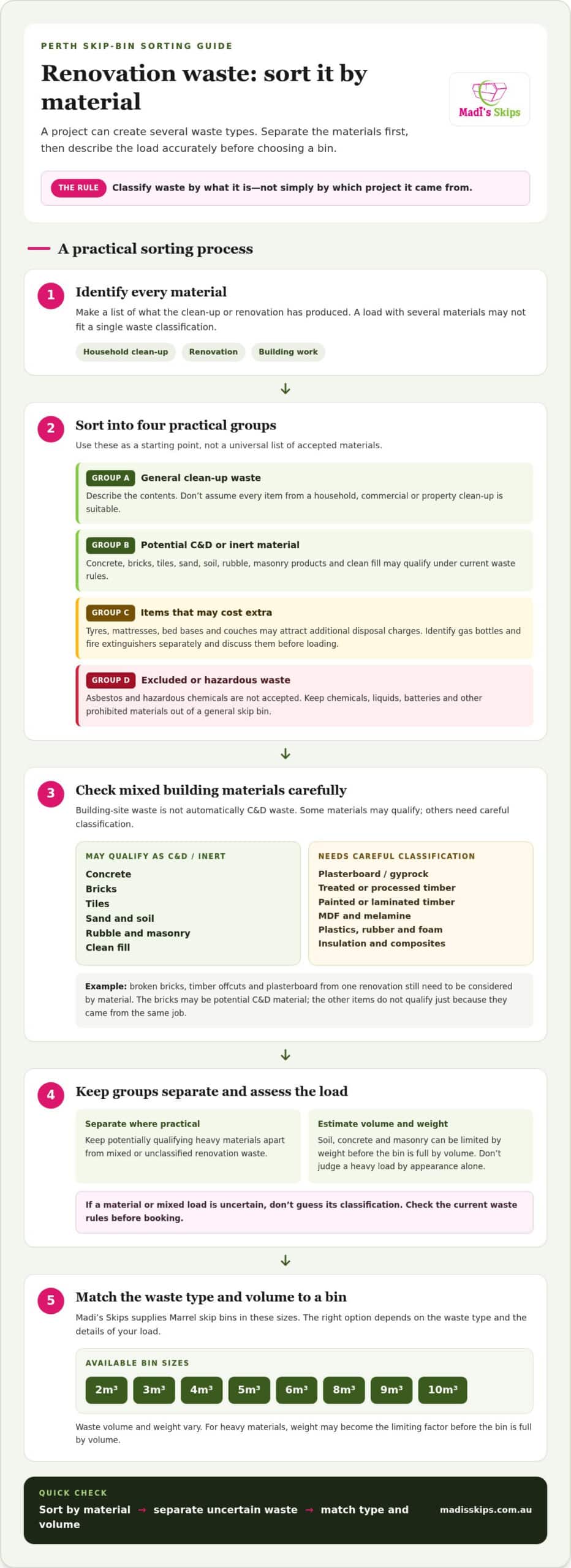
How to Sort and Load Waste Before Your Skip Bin Arrives
Preparing a clear waste list makes it easier to describe your load and choose a suitable bin. Before booking, note the main materials, separate anything uncertain, estimate how much waste you’ll have, then compare bin options. This is particularly useful for Perth renovation and clean-up jobs where heavy materials and mixed rubbish may need different classifications.
A simple waste-sorting process for Perth projects
Work through these steps before booking. A clear inventory helps you distinguish the waste category from the amount of space your project may need.
- List the materials. Note the main waste types and include unusual or bulky items, such as a mattress or gas bottle. For building work, record masonry, timber, plasterboard and other materials separately instead of labelling the whole pile “renovation waste”.
- Set aside uncertain items. Keep anything you can’t confidently classify out of the proposed load until you’ve checked it with Madi’s Skips. Excluded materials must remain out of the bin.
- Estimate the volume. Consider how much space the waste will take, allowing for bulky shapes and items that won’t pack neatly. The skip bin size guide can help you estimate the project’s likely volume.
- Compare suitable bin options. Review the available skip bin sizes alongside your waste type. Volume is only part of the decision if the load contains heavy material.
Keep potentially qualifying heavy materials separate from unclassified mixed waste where practical. This gives you a clearer description of each group and avoids assuming that different materials can all be booked together.
Keep heavy waste and mixed loads in view
Soil, concrete, bricks and rubble can be heavy. A load may reach its applicable weight limit before the bin looks full, so don’t choose capacity by judging space alone. Heavy waste can be weight-limited before it is volume-full. The relevant limit depends on the booking, so don’t guess an allowance or assume an almost-empty bin can take more material.
For example, a small pile of dense concrete can weigh more than a larger-looking pile of lighter mixed rubbish. If your job includes both, list them as separate materials and keep them apart where possible. This supports an accurate waste classification and helps Madi’s Skips understand the load before you select a bin.
Once you’ve sorted the materials and estimated the volume, include those details when arranging your hire. If an item’s status is unclear, leave it out until you’ve spoken with Madi’s Skips. Getting the waste type right first is a practical step towards choosing an appropriate bin.
Book the Right Madi’s Skips Bin for Your Waste
Choosing a bin is easier once you’ve identified the waste type, noted unusual items and estimated the load. The answer to “what can you put in a skip bin” depends on the material and Madi’s Skips’ current rules, so settle the waste category before focusing on capacity. Then consider both how much space the waste takes up and how heavy it is.
Madi’s Skips supplies Marrel skip bins in 2m³, 3m³, 4m³, 5m³, 6m³, 8m³, 9m³ and 10m³ sizes for domestic, commercial, construction and industrial projects across Perth. The right option depends on the job. A household clean-up with bulky furnishings may need a different capacity from a small renovation, while soil or masonry may be limited by weight before the bin is full by volume.
Choose a bin size that fits the project
Think through the waste you expect to produce, not just the size of the room or work area. For a property clean-up, list bulky items and general rubbish separately. For a renovation, consider the amount of each material and whether heavy waste is involved. These details give you a more useful estimate than guessing from the project label alone.
There isn’t one size that suits every job. Waste volume varies, and dense material can affect the decision even if the pile looks modest. Compare your estimate with Madi’s Skips’ available skip bin sizes, and describe your materials clearly in the booking. Avoid relying on exact volume conversions or assumed weight allowances when planning a mixed or heavy load.
For example, clearing several rooms may produce a large volume of lighter items, while a smaller amount of concrete or soil can be heavy. These are different planning needs. If your project combines both, keep the material groups separate where practical and include each in your description of the load.
Check unusual waste before booking
Flag unusual or bulky items, including anything that may be excluded or attract an additional disposal charge. If you’re unsure about an item’s classification, contact Madi’s Skips before booking and keep it out of the bin until you’ve received guidance. A clear description, including the material and approximate amount, helps explain what your project will produce.
Use Madi’s Skips’ current guidance for your waste type, particularly for mixed building materials and items that need separate consideration. Don’t assume an item is suitable for your booking without checking its classification.
Once your waste details and approximate volume are ready, you can book a Madi’s Skips bin online. If you’re still uncertain, get advice on the waste category before placing anything in the bin.
Get Your Perth Clean-Up Ready to Go
Before work begins, keep your waste list handy and use it as a guide on site. As materials come out, place them in their planned groups to avoid turning a clear waste category into a difficult-to-classify mixed load. If something unexpected turns up, pause before adding it and get guidance. That check can make the next booking decision more straightforward.
Knowing what can you put in a skip bin is a useful first step, but the right choice also depends on the project’s materials and the space and weight they’ll take up. Madi’s Skips is locally owned and operated in Wattleup, serving Perth and surrounding areas with skip-bin hire for domestic, commercial, construction and industrial projects.
Once you’ve prepared your waste details, you’re ready to choose a suitable option for the job.
With a clear plan in place, you can get on with your clean-up with greater confidence.
Frequently Asked Questions
Can you put carpet in a skip bin?
Carpet needs to be assessed under the waste rules for your booking, so don’t assume it’s suitable for every bin. Before booking, estimate how much carpet you have and note whether it’s loose, rolled or attached to other renovation materials. Share those details with Madi’s Skips for guidance, and keep it out of the bin until its waste category has been established.
Can you put electronic waste in a skip bin?
Don’t assume electronic waste is accepted in a standard skip bin. Items such as a computer, television or small appliance can have different disposal requirements, and Madi’s Skips’ current rules determine whether an item is suitable. List each electronic item separately and contact Madi’s Skips before booking. Never put batteries in the bin, even if they’re still inside a device.
Can green waste and general rubbish go in the same skip bin?
Don’t assume garden waste and general rubbish can share a bin. Their classification may depend on the materials and the booking’s waste rules. Keep branches and garden clippings apart from household rubbish while preparing your waste details. Tell Madi’s Skips what each group contains before booking, so you can select a suitable waste type rather than mixing materials and guessing.
Can a skip bin be placed on a verge or road in Perth?
Requirements for placing a skip bin on public land, such as a road or verge, can vary between local councils. Check with the council responsible for the location before arranging placement on public land, roads, footpaths or other council-controlled property. If the bin can sit entirely on private property, such as a driveway, it won’t be on council-controlled land.
What should you do if you are unsure whether an item is accepted?
Keep the item out of the bin and ask Madi’s Skips before booking. Describe what it is, what it’s made from and, if relevant, whether it’s mixed with other materials. A clear description is more useful than a broad label such as “renovation waste”.
Can you put more than one type of building waste in a skip bin?
Possibly, but don’t assume every combination belongs in one waste category. Separate the materials as you sort them, then describe each group when discussing your booking. For example, identify masonry separately from processed timber or plasterboard. This gives Madi’s Skips the information needed to assess the load under its current rules. Keep uncertain materials aside until you’ve received guidance.
How do you estimate the weight of soil, bricks or concrete in a skip bin?
You can’t reliably judge the weight of soil, bricks or concrete from how much space they appear to occupy. The material and its condition affect the load, and dense waste can become weight-limited while the bin still looks partly empty. Note the type and approximate quantity you plan to remove, then discuss the load with Madi’s Skips before booking. Don’t guess a weight allowance.
Disclaimer
The information provided in this article is general in nature and is intended as a guide only. While Madi’s Skips aims to provide accurate and up-to-date information, skip bin availability, pricing, service areas, waste classifications, disposal requirements, weight limits, surcharges and other conditions may change and can vary depending on the type and quantity of waste, bin size, delivery location and disposal facility requirements.
Information in this article should not override Madi’s Skips’ current Terms & Conditions, booking conditions or the information provided during the online quoting and booking process. Where there is any inconsistency, the current Terms & Conditions and booking information applicable at the time of hire take precedence.
Waste acceptance and classification can depend on the materials contained within a load. If you are unsure whether a particular material can be placed in a skip bin or which waste type you should select, please contact Madi’s Skips before booking or placing the material in the bin.
Any information relating to council permits, regulations or requirements is general guidance only. Requirements may vary between local government areas and can change over time. Customers are responsible for confirming any applicable requirements with their relevant local authority.
Madi’s Skips accepts no responsibility for loss, additional charges or other consequences arising from reliance solely on general information contained in our blog without confirming the requirements applicable to your individual booking.
